
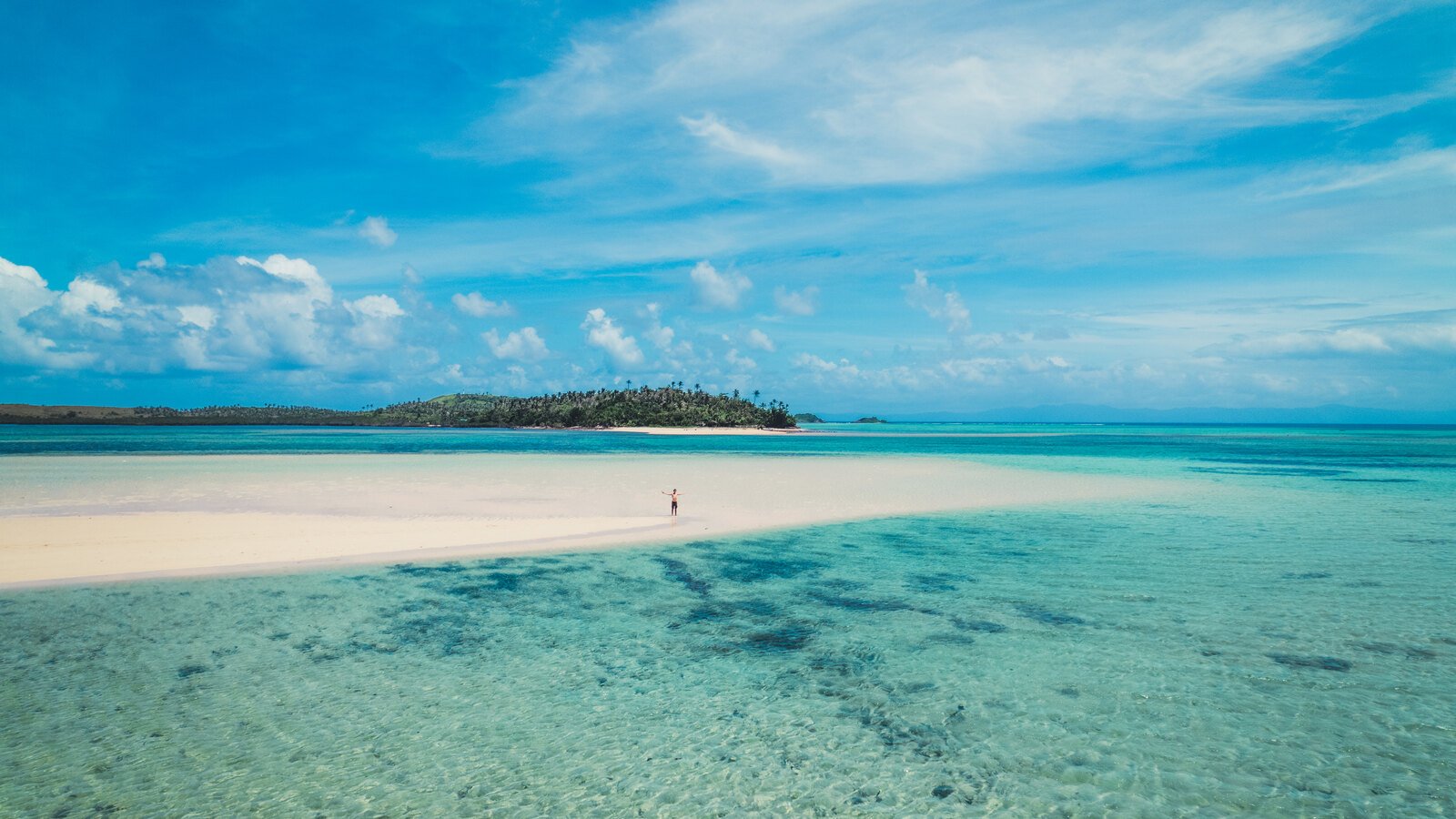
Short version: in Camarines Sur the water is not scenery in the background, it is a routine. The CamSur Watersports Complex runs on a cable system and does not shut when a season ends, so nobody here waits for the good month to get wet. Out of that steadiness came something no plan called for: a community with its hours, its familiar faces and its way of receiving whoever turns up for the first time.
A cable, not a boat
Start with the mechanics, because everything else follows from them.
In a cable park nobody rides behind a boat. The rider clips onto an overhead line that runs the circuit on a series of towers, and that line pulls him lap after lap at a steady speed, with no engine roaring alongside and no wake to dodge. It reads like a technical footnote. It is actually the decision that sets the mood of the whole place.
No boat means no fuel and no skipper. It also means no waiting for the boat to swing back for you, because the line keeps turning and the next turn follows the last. Circuit water is flat and predictable, which lowers the barrier to entry in one stroke: somebody who has never stood on a board can try it on a Tuesday afternoon without having booked anything the week before.
That single detail explains why the complex filled up with beginners instead of hardening into a closed club of people who already knew the moves. Nobody is out of place here.
What changes when the sport ignores the calendar
Almost every water sport lives at the mercy of something nobody controls, and that dependency ends up dictating the entire year of the people who practise it. The wave, the wind, the tide, the months when the sea behaves. Outside that window the practitioner stays on land, refreshing forecasts and waiting for conditions that may never show up.
Not here. The cable circuit runs all year, and that continuity is what builds a community. A group that only overlaps for three months never sets. A group that overlaps every week for years ends up with nicknames, internal arguments, people teaching the new arrivals and a pile of small rituals nobody ever wrote in a rulebook.
There will be days when the weather decides. Camarines Sur gets heavy rain and sometimes you wait it out. Waiting a day is not the same thing as waiting until November, though, and the difference shows in how people arrange their lives.
The community assembled itself
The first thing a cable park teaches you is that falling embarrasses nobody.
Falling is part of the paperwork. Beginners fall standing up, fall turning, fall on their first attempt at a feature, and what comes back from the bank is not a joke but a short, sincere round of applause. No sporting director imposed that code. It formed because everyone riding a clean lap today was the one falling a few seasons ago.
The rest grew around the water. People who started coaching because they turned out to be good at explaining things, cheap places to eat after a long afternoon, accommodation built for somebody arriving with a board and a thin budget, improvised mechanics who adjust bindings. The complex supplied the cable. Everything else came from the people who kept coming back.
That is the part most easily missed when a region is judged from outside. A sports facility attracts visitors. A sports facility that never stops attracts residents, which is a different category altogether and far harder to earn. It takes years.
The water does not end at the circuit
Reducing the province to a wakeboarding park would be unfair, because what surrounds it pulls in the same direction.
East lies the Caramoan peninsula, with limestone karst islands, white sand beaches and the kind of island hopping you arrange in the morning with a boatman and close at sunset. Inland rises Mount Isarog, a dormant volcano and national park, with trails, waterfalls and hot springs. There is also Lake Buhi, recognised for the sinarapan, which counts among the smallest edible fish found anywhere in the world.
Different plans, one shared root. Here the water is where things happen, not the postcard you look at from the terrace.
Naga sets the pulse
The city that serves the whole province is Naga, and its character pushes the same way.
It is a university city, with commerce, a hospital and a moderate weeknight social life. Students fill the cafés in term time, and the airport at Pili keeps Manila a short hop away, which is why the province never feels cut off from anything. September brings the Peñafrancia Festival, among the largest Marian devotions in Asia, with a fluvial procession that fills the river with people. Bicolano cooking rules the table. Chilli, coconut milk, dishes such as laing and pinangat, and pili nuts turning up in everything from a snack stall to a formal dinner.
None of it is tourist set dressing arranged for the photograph. It is what the people living here actually do, and that is exactly the line between a place you visit and a place you stay.
Why this matters if you are weighing San Fernando
Land of Nomads is raising its eco-villas in San Fernando, inside this same province, and the water culture conditions far more than it appears to.
For the traveller who books a night, it means the plan exists all year and does not hinge on guessing the right month. For anyone signing a leasehold and placing a unit in managed rental, it means demand in the area does not switch off when one particular season closes. And for anyone considering long stretches here, it means walking into a community that already exists, which is the hardest thing to improvise when you land somewhere new.
The sport brought people, the people brought services, and the services ended up holding on to those who had come for a single week.
Frequently asked questions
Do I need previous experience to try wakeboarding here?
No, and half the appeal of the cable system sits precisely there. Circuit water is flat and the pull never varies, which makes the learning curve far gentler than anything played out on waves. You start lying in the water and finish standing. Most people sort the first attempts out in one afternoon.
Does the complex close out of season?
The cable system operates all year, which is what separates it from facilities tied to the weather. Conditions can force a pause on the odd day, though the calendar is not arranged around seasons.
What if wakeboarding does nothing for me?
The province works just as well without a board. The Caramoan islands, the trails and waterfalls of Mount Isarog, Lake Buhi and the food in Naga carry a long stay between them. The water is still there.
Is it far from San Fernando?
It sits in the same province, on the Naga and Pili axis, so you reach it by road within the same day and without staging an expedition. Flights from Manila land at the local airport in a little under an hour.
Life close to the water is easier to explain in conversation than on a page. If you are weighing San Fernando as a base or as a destination, the Land of Nomads team will walk you through what the area is actually like and what fits what you are after.