
In short: last Saturday, more than a million people gathered on the banks of a river that runs eight minutes from San Fernando. Not a concert, not a match: a procession that has been repeating itself for 316 years. Anyone looking at Camarines Sur with rental weeks in mind should know that date exists, because it governs the whole of September.
What happened on Saturday
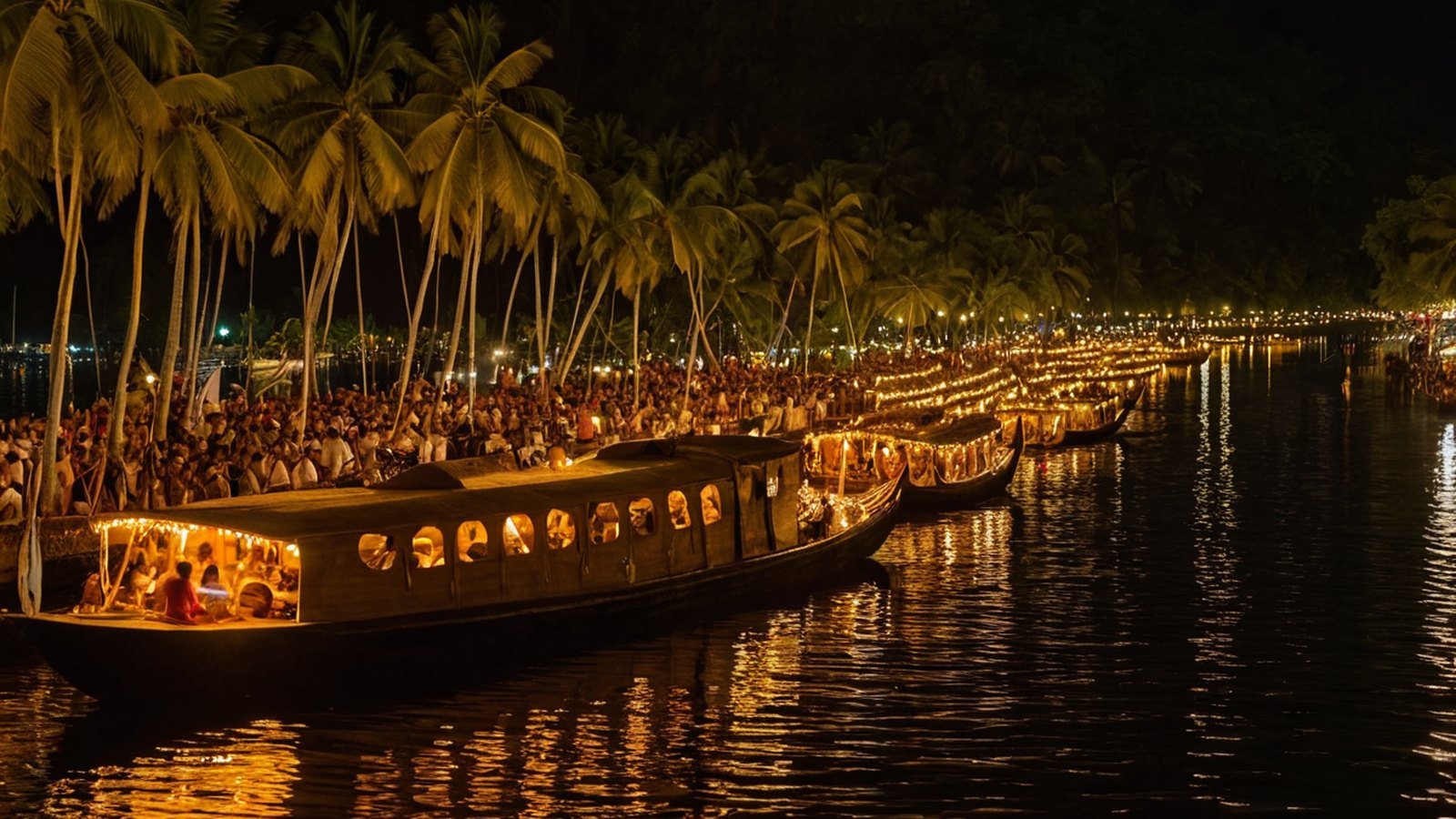
On 19 September, late in the day, the image of Our Lady of Peñafrancia came down the Naga River on a barge surrounded by small boats.
On both banks stood 1.2 million people, according to the count released by the Bicol regional police. Naga has a little over 200,000 residents. The arithmetic does the rest: that night the city hosted several times its own size.
One detail had never happened before. The procession was held at night for the first time in its history, because the river was running too shallow at low tide to float it by day. Three hundred and sixteen years of doing the same thing at the same hour, and this year they moved it. Nobody stayed home.
The two dates that shape the month
The festival is not a day. It is a long month, and it has two peaks.
The Traslacion, 11 September. The image is carried on foot from its old shrine to Naga Metropolitan Cathedral. This year around 820,000 people turned out, again by the police count. Almost everyone walks, and it happens at midday, with everything that implies in Bicol heat.
The fluvial procession, the third Saturday. This is the return journey and the one that ends up in photographs: the river packed with boats, the voyadores (the devotees who carry and escort the image, dressed in yellow) waist deep in the water, and the crowd pressed along both margins for hours beforehand.
In between there is a daily novena, parades, a voyadores competition and a regional military parade. Nearly a month of something almost every day.
The figure an owner should care about
Here is the part no travel guide covers.
On 16 September the Philippine government signed Proclamation 1444 and declared Friday the 18th a holiday across seventeen municipalities in Camarines Sur and Masbate, so people could attend. Bombon, Bula, Calabanga, Camaligan, Canaman and a dozen more.
A national government halting half a province for a feast says two things at once. The first is cultural and needs no explaining. The second is commercial: during that week there is not a free bed within forty kilometres, and prices behave accordingly.
That is why the rental operation treats the date separately. Longer minimum stays, the calendar closed to one-night bookings, and the rate held rather than discounted. This is not a clever idea: it is what anyone running accommodation in Bicol does once they know what is coming.
It is the same reasoning that has Spaniards planning Easter week months ahead. The difference is that almost nobody outside the region knows this one exists.
Where it all comes from
The devotion dates to 1710, when a Spanish student in the area commissioned an image modelled on Our Lady of the Rock of France, from the mountains near Salamanca. Hence the name, which throws every Spanish speaker who hears it for the first time.
Three centuries later it is the largest Marian gathering in Luzon and the feast that defines the identity of the whole Bicol region. Locals do not use the full name. They say "Ina", which simply means Mother.
What surprises outsiders is not the scale. It is that inside a crowd of a million people, at night, pressed against a river, the policing operation closed with no serious incident. The regional police chief said so himself at the end of the night.
Going without being a devotee
You can, and plenty of people who aren't do.
Three things are worth knowing first. Accommodation: searching in September for September does not work, you book months out. Getting around: central Naga is closed off, so a car is more hindrance than help and you walk. Clothing: heat, humidity and crowds, in that order.
And a warning about photographs: the river fills with boats and the bank is fenced for safety. The good view is from where you are allowed to stand, not from where you would like to.
Why we are telling you this
This blog has spent months circling the same idea from different angles. The market at five in the morning. The hospital twelve minutes away. Pili airport.
Peñafrancia is another piece of it, probably the biggest. You do not understand a place through its scenery. You understand it through what its people do when no tourist is watching. Here, once a year, an entire province stops.
San Fernando sits inside that radius. Anyone with a villa there will have that week marked in the calendar permanently, for one reason or the other: because they want to go down and watch the river, or because their unit has been full for months.
Most likely both.
Frequently asked questions
When does it fall in 2027? The main feast is always the third Saturday of September, so it can be planned a year ahead. Naga's tourism office publishes the full official calendar a few months before.
Do you have to be Catholic to attend? No. It is a religious celebration and is respected as such, and at the same time the whole city is in festival mode for those days. All kinds of people go.
Does it affect flights and transport? Yes, considerably. Pili airport and the buses from Manila fill up the week before. Anyone travelling on those dates books early or does not travel.
Does this make buying in the area more expensive? It is unrelated. It affects the nightly rate for accommodation over a handful of days, which is a question of occupancy, not of what the property is worth.