
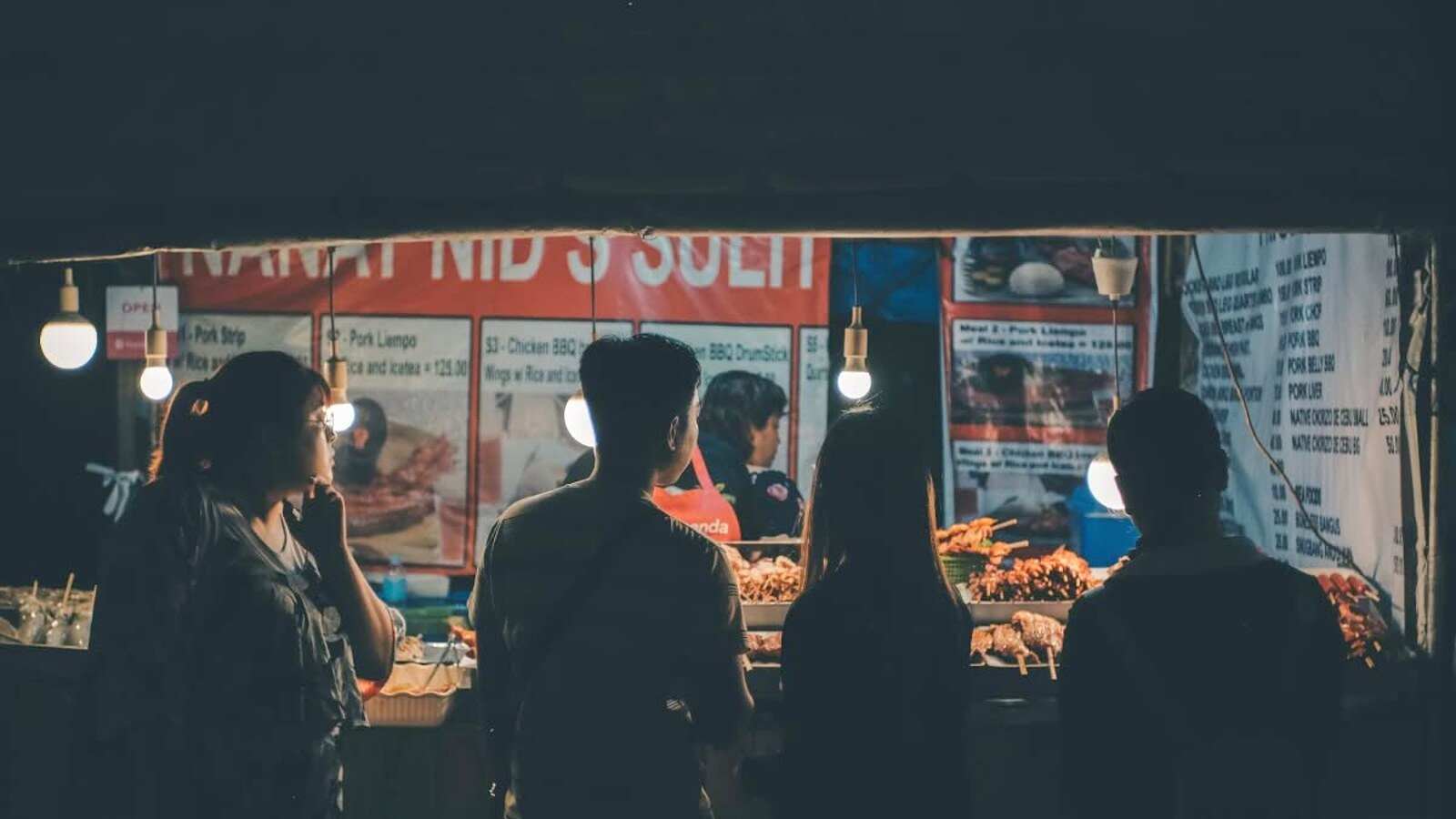
In short: every city has an hour when it shows what it is actually made of, and it is never the hour that ends up in photographs. In Naga that hour is five in the morning, when the public market has already been awake for a while and is feeding half the province while everyone else sleeps. Anyone weighing up long stays in Camarines Sur will find more answers there than in any brochure.
The city that works at night
At five, Naga is dark and busy.
Tricycles cross the avenue with the sidecar loaded to the roof, and along the market pavements people unload crates that came in overnight from the coast, from the inland farms, from the villages further up the hills. Nobody is rushing. Everybody moves fast, which is not the same thing.
This is the hour when the sellers do their own buying: carinderia owners, hotel cooks, women who in two hours will be running their own stall three streets over. The general public turns up around seven. By then the best of it has moved, and whoever arrives late buys what is left.
That happens all 365 days. A public market has no high season and no low one, and that is the first interesting thing about the place.
What is on the stalls
Fish arrives whole, in crates of ice that somebody chips by hand every dawn. Tuna. Bangús. Small shellfish from the bay, sold by the little heap.
The vegetables still have soil on them. Tomatoes are smaller than European ones and taste considerably better, though that depends on what you are comparing them with. There is green chilli in quantities that startle anyone unfamiliar with the cooking here, and coconut in every imaginable form: the water, the flesh, the milk somebody presses in front of you on a machine that has been turning for decades.
That last one explains half of Bicolano cooking.
The food that comes out of it
Bicol is the spicy region of the Philippines. Chilli and coconut milk: that is the entire formula, and out of it comes a repertoire that resembles nothing else in the country.
The dish everyone names is Bicol Express, pork stewed in coconut milk with green chilli. It is eaten across the whole country, though here it is a household thing and you can tell.
Next to it sits laing, taro leaves simmered in coconut until they fall apart, and that is the one that really separates a good cook from a passable one. Neither works with frozen produce. The coconut has to be from that morning and so does the chilli, which is why the market opens at four and why the restaurants send somebody out every single day.
Anyone who settles in for a long stretch ends up doing the same. Almost without noticing.
The prices
This is where anyone arriving from Europe raises an eyebrow, and one lap around the stalls is enough to explain it.
Fresh vegetables for several days cost what a coffee and a pastry costs back home. Fish is priced by the piece, and the piece is generous, the kind that stretches to two meals with some left over. Haggling exists, gentle and quick, and it works better if you buy in quantity than if you argue over each item.
The interesting part is not the saving. It is that eating fresh every day stops being a decision you make and becomes the default, simply because it is the cheapest option and the one closest to hand.
Eight minutes away
San Fernando sits inside that city’s daily radius. Fresh produce is eight minutes away at the local market, and the private hospital with English-speaking doctors is twelve.
Two numbers you can check with a watch, and they say more about life in the area than three paragraphs of scenery.
They mean Saturday breakfast gets decided on Saturday, not on Thursday while pushing a trolley around a supermarket. That a guest staying in a villa can ask where to go and come back with something they would never have found sealed inside a resort. And they mean, fundamentally, that life there runs much as it runs anywhere with a market, which is a quiet way of saying the place works.
Why we write about this
A project is almost always explained by what you see from the terrace. Here we have spent months telling the opposite story, and not by accident: the hospital, the airport, the hardware shop, the market.
This is not modesty. The scenery is enjoyed during the first week and the rest of the year happens in everything else, in the places nobody photographs because there is nothing to photograph. You come for the pictures. You stay for the dull parts.
Naga market at five in the morning is the most literal version of that idea: a city that has been up for two hours so that by seven everyone has something to put on the table.
Frequently asked questions
Can you manage without speaking the local language?
Easily. English is an official language in the Philippines and it is used normally in shops and markets. Camarines Sur also speaks Bikol and Tagalog, and learning four words changes how people treat you, even though you do not need them.
Do you really have to get up that early for it to be worth it?
Not at all. At seven the market is still going, with more stalls open than at five. That earlier hour belongs to the professionals: a different experience, not a better one.
Is Bicolano food too spicy?
It has a reputation for heat and the reputation is fair, but the level is adjusted when you order. Coconut milk rounds it off considerably, and plenty of local dishes carry no chilli at all.
Does any of this relate to the 99-year leasehold?
Not directly. That instrument governs the right over the unit for 99 years and nothing more, so the market, the hospital and the airport remain part of the area: they are there for whoever is there, contract or no contract.
Want to know what an ordinary Tuesday looks like out there? The Land of Nomads team will tell you without the brochure, in as much detail as you ask for.