
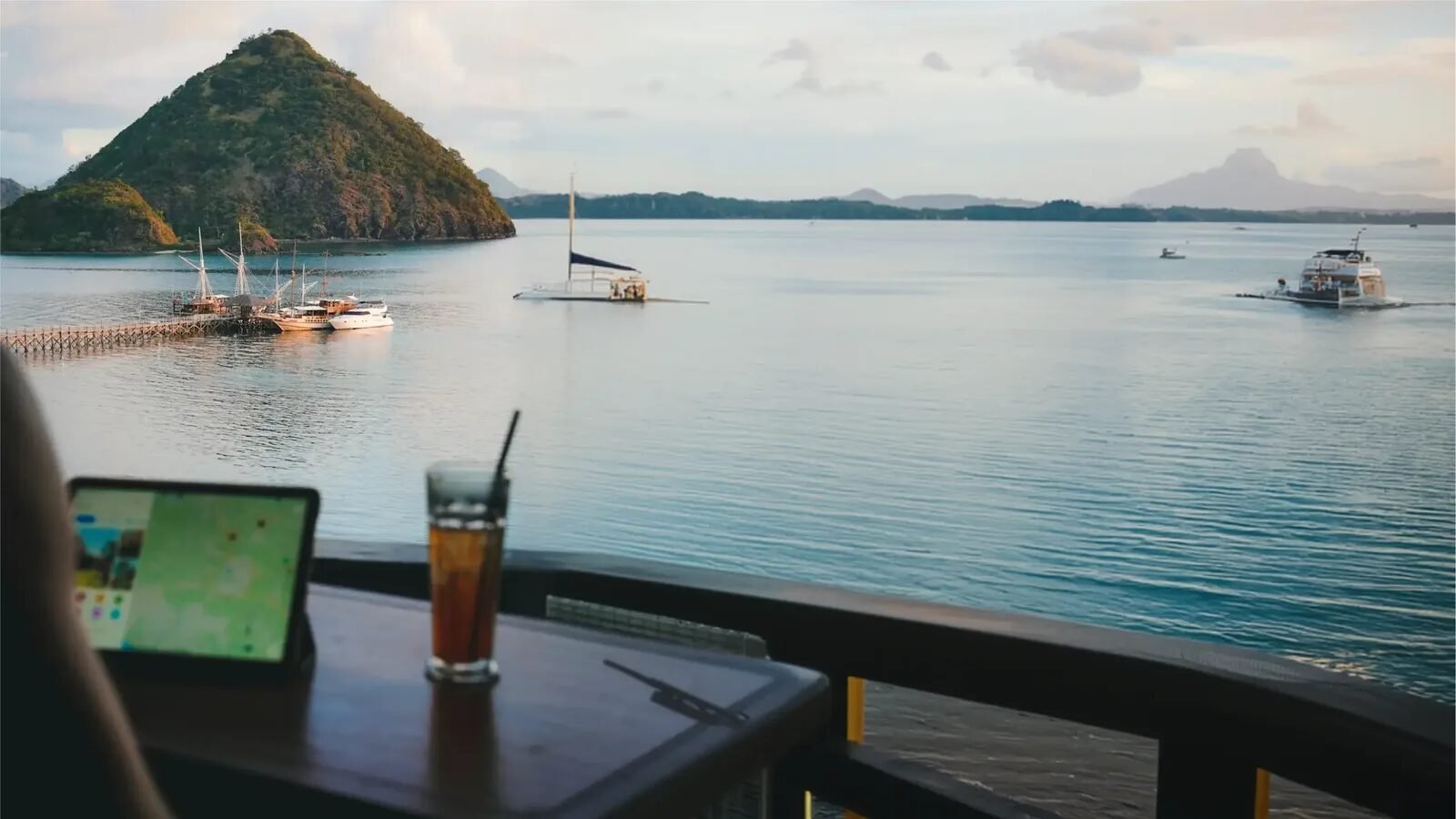
Working from the Philippines sounds good: steady climate, nature close by, a flexible cost of living and a calmer pace. But working remotely isn’t a holiday. Before you decide anything big, it’s worth understanding what the day-to-day is really like.
Internet in the Philippines: what you need to know
Philippine internet has improved a lot in recent years, but it isn’t uniform.
It depends mostly on:
- The island or city.
- How close you are to urban centers.
- The provider available.
- The type of home.
In developed areas and main cities you’ll find stable fiber and plenty of speed for video calls, online work and running a business. In remote areas the stability varies. So the question isn’t “is there internet?”, it’s which specific area you want to settle in. If you’re weighing long stays, we look at it in living seasonally.
The time zone: edge or challenge depending on your market
The Philippines runs on GMT+8. Working with Europe, much of your day falls in the afternoon or evening. With the Americas, the hours get tighter. With Asia or Australia, you play with an edge. Many professionals split the day: deep work in the morning, international calls in the afternoon. The key isn’t the clock, it’s your business model.
The real routine vs the digital fantasy
Working from a tropical setting has clear upsides: more connection to nature, a less frantic pace, less social pressure. But it also means adjusting to constant heat, the need for good ventilation or air conditioning, and energy management in certain areas. That’s where the type of home and how it fits the climate matter, something we develop in the hidden side of tropical real estate.
Is it actually viable?
Yes, but not for every profile. It’s more viable if you work fully online, don’t depend on being physically in one country and have diversified income. It’s less viable if you need constant corporate infrastructure or rely on in-person clients. And an important distinction shows up: working from the Philippines for a season isn’t the same as setting up a strategic base, something we cover in acquiring a home or building a life abroad.
Working from the Philippines is entirely possible, but it asks for planning: choose the area well, weigh your professional model, understand the time zone and set expectations to match the setting. When it all lines up, it makes a powerful mix of quality of life and productivity.