
Short version: San Fernando sits in Camarines Sur, a short drive from Naga City. The day here starts earlier than almost anyone expects, runs through a market that has been trading since before dawn, carries on with hours in the water at the best known cable wakeboarding park in the country, and ends at a table that smells of coconut and chilli. This is not a sealed postcard destination. It keeps a schedule of its making, and you feel that schedule in week one.
The sun is up before six
Camarines Sur light does not negotiate.
By half past five there is enough of it to move around, and by six the air is still kind, so anyone settling here ends up shifting the whole day forward without ever deciding to. Roosters help. So do the tricycles, which start early and ask nobody.
That has a practical consequence: the best hours sit at the front of the day, not the end. People arriving from Europe take a fortnight to surrender to it. Then they never go back.
The market opens in the dark
By five in the morning the Naga market has been running a while. Fish crates come up from the coast, vegetables come down off the slopes of Mount Isarog, and the central aisle smells of melting ice and freshly cut leaf.
Nothing about the scene is picturesque. It is simply when half the province gets supplied.
A normal walk through fills a bag with this: morning fish, gabi leaves for laing, coconut grated in front of you, long green chillies, calamansi by the kilo, and pili, the regional nut, roasted and sold in paper. Prices settle through conversation rather than haggling. Greeting someone first makes the whole thing go a good deal faster.
Mornings are for work
The area handles remote work without drama. Fibre in the newer houses, decent mobile data outside them, and a time difference that drops the European morning into the Philippine mid-afternoon.
Anyone working with clients in London or Madrid ends up flipping the usual order: deep hours before lunch, calls after it. With the United States it runs the other way round. Most people work out where their slot sits within a fortnight of landing, and then stop thinking about it.
One thing no guidebook mentions. Mornings here are genuinely quiet, because the noise of the area clusters at sunrise and sunset rather than in between.
Midday, and the table changes the rules
Camarines Sur cooks with two things the land insists on: coconut milk and chilli.
Laing is gabi leaf simmered slowly in coconut until it collapses. Camarines Sur Express brings pork, coconut and rather more chilli than a European palate expects on a first attempt. Pinangat comes wrapped in its leaf, tied with plant fibre and steamed until the coconut clings to everything it touches.
None of the three is mild. All three are cheap.
Eating out here is not a weekend plan, it is routine. Lunch runs long. The heat between one and three argues hard for doing nothing at all, and local families have been taking that advice for generations.
The afternoon belongs to the water
This is where Camarines Sur parts company with the rest of the country.
The CamSur Watersports Complex runs on cable. Instead of a boat pulling the rider, an overhead circuit drags them at steady speed around a man-made lake. That detail is not small, and it changes two things at once: it makes a session cheap, because there is no fuel and no skipper, and it makes the sport possible twelve months a year, because nothing depends on swell or sea state.
A stable community grows out of that. Filipinos from Manila who come down at weekends, competitors who train for whole seasons, beginners who fall two hundred times on a first afternoon and come back the next morning stiff and grinning. The water stays warm all year, and falling in hurts a good deal less than it looks from the bank.
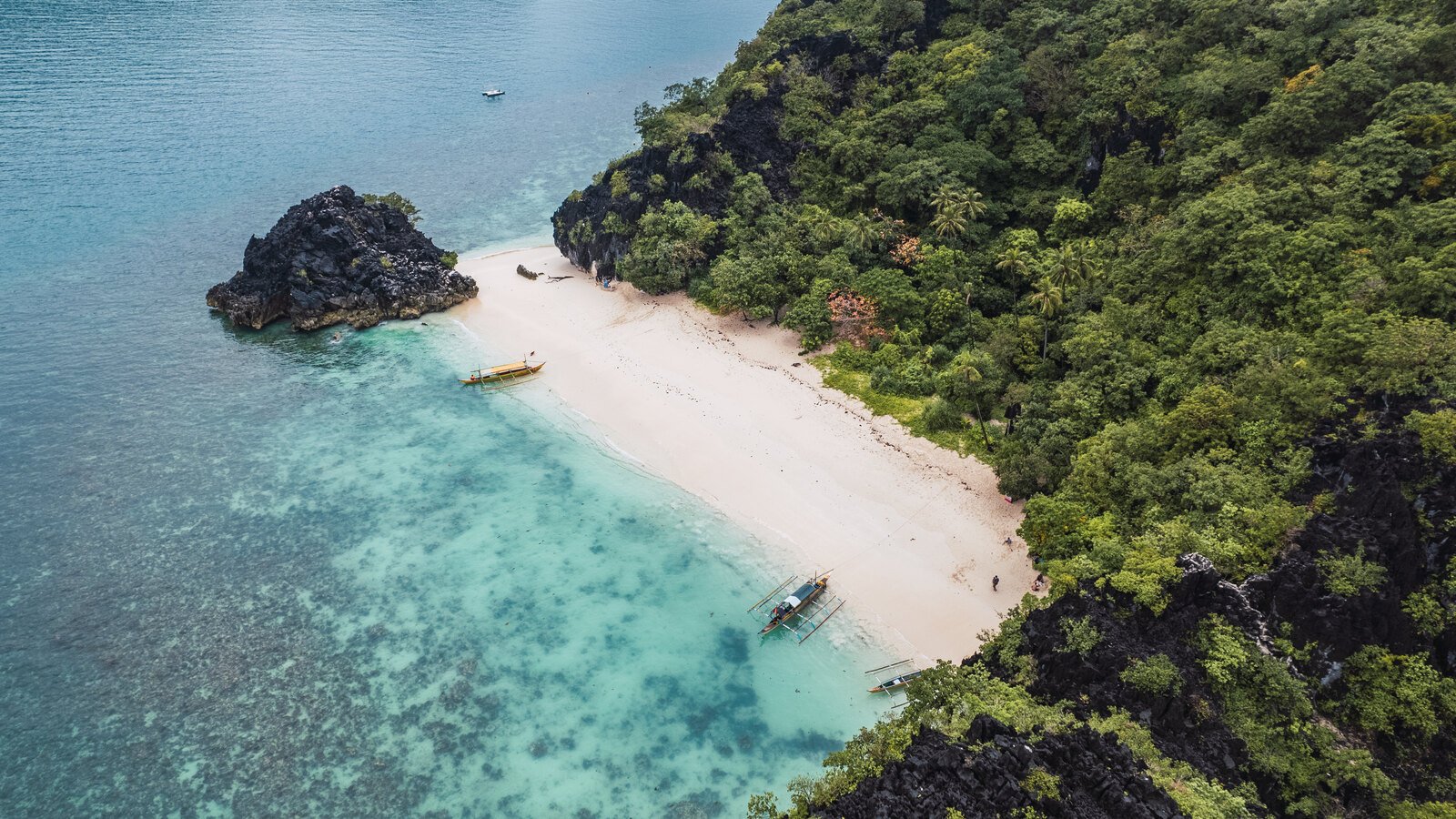
There is a second half to the plan for anyone who would rather stay off a board. The Caramoan islands sit on the eastern side of the province, with beaches wedged between limestone walls and sand that is usually empty. You drive to the port and continue by banca, the local outrigger boat. That is not a half-hour errand by any measure, which is exactly why the place stays quiet.
Sunset is short, and everyone plans for it
Tropical light does not hang about waiting. The sun drops, touches the horizon and goes, and barely half an hour passes between the first colour and the moment you reach for a lamp.
People here know this and position themselves early.
The rice paddies hand the whole sky back, because the flooded plots act as mirrors between plantings, and that is probably the image most people carry away after a season in the area. Then the insects start up. And a real darkness arrives, with no urban glow sitting on top of it.
Naga handles the rest
The city is a short trip away and covers what daily life occasionally demands: hospital, universities, an airport with Manila connections and shops of every kind. There is a modest nightlife too.
That combination lets you keep small-town rhythm without being cut off, which is a hard balance to strike in Southeast Asia this far from the coast.
Then there is the rain
Camarines Sur gets serious rain, and between June and December it sits on the typhoon track. Pretending otherwise would be silly.
What people do is organise around it. Outdoor jobs get pulled forward, mornings get used properly, and houses go up on the assumption that water will arrive in quantity. A wet day here is not a lost day. It is a different one, with the house at the centre and the market open exactly as always.
Where an eco-villa fits into that day
The 368 eco-villas of San Fernando are built inside this day rather than alongside it.
The Standard unit covers 56 m² and the Premium 64 m², and both are acquired on a 99-year leasehold. When the leaseholder is away, the villa moves into managed rental and takes guests: the Standard from 90 euros a night, the Premium from 120. The rest of the time the house answers to the person who acquired it, and the day it sits inside is the one described above.
Frequently asked questions
Is San Fernando near the sea?
It sits in the province of Camarines Sur, in southeastern Luzon, with the coast and the Caramoan islands within driving distance. Daily life leans more on the rice fields, the fresh water of the wakeboarding park and the city of Naga than on the beach.
Can you live here without speaking Filipino?
Yes. English is an official and academic language across the Philippines, and Camarines Sur adds Bikol and some Tagalog. Learning four polite phrases in Bikol opens doors that English simply does not.
What if chilli is not your thing?
You ask for it without, which in Camarines Sur counts as a small surrender. Grilled fish, rice, steamed vegetables and year-round fruit are all there, so nobody goes hungry for lack of heat tolerance.
What does a day look like in the wet season?
Shorter outdoors and longer indoors. Rain comes hard and in bursts, rarely as a continuous week, so the sunny windows exist and people use them to get out, move and get back.
A day like this reads better told than written, and it makes full sense once somebody walks you through where your particular case fits inside it. The Land of Nomads team has that conversation slowly and without templates, starting from what you are after rather than from what happens to be available.