
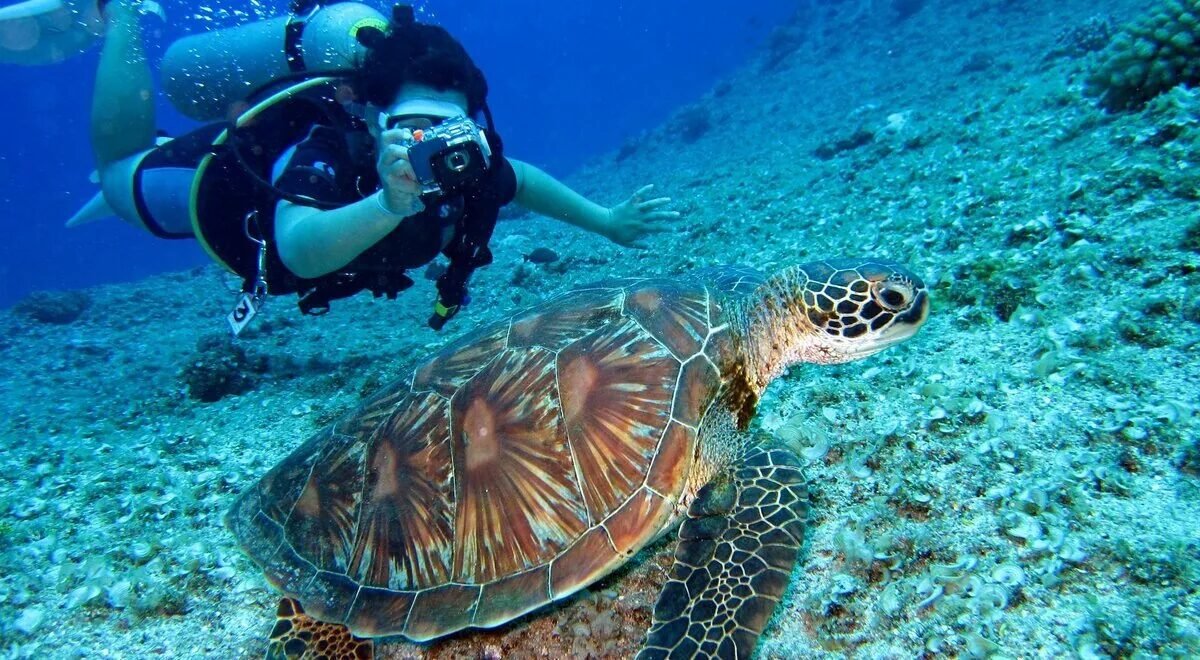
The marine life of the Philippines isn’t brochure decoration. It’s the base of tourist demand you can’t manufacture: more than 500 coral species, whale sharks in Donsol, protected reefs in El Nido. That natural capital keeps nightly rates high and occupancy steady, and with it the return on an eco-villa put out to rent.
The Philippines packs 22% of the planet’s marine biodiversity into just 1.7% of its ocean surface. That figure isn’t only nature. It’s why a traveler crosses half the world to dive here, and why rates hold up when other destinations collapse.
Someone who comes to swim with whale sharks in Donsol or dive the reefs of El Nido isn’t booking a bed. They’re after access to something that exists in very few places. When supply is finite and global demand climbs, occupancy stays high and rental assets in those areas return what other markets can no longer match.
Donsol and the whale sharks, in the same region as San Fernando
A road trip from San Fernando, in Camarines Sur, within Camarines Sur, sits Donsol, in Sorsogon province. Donsol holds the largest publicly accessible concentration of whale sharks on Earth.
The whale shark (Rhincodon typus) is the biggest fish on the planet: up to 12 meters and 21 tonnes. At that scale it’s entirely harmless, feeding on plankton and tiny fish. The town has run access alongside WWF Philippines since 1998, under strict conservation protocols.
Peak season runs November to June. Some days you’ll spot up to twenty animals on a single outing. Packages run between $50 and $120 a head. Nothing anywhere comes close at that price.
Whoever travels to see whale sharks doesn’t leave the same day. They stay several nights, need quality lodging, eat at local restaurants, book excursions. That spend spread across days is what keeps the region’s eco-resorts alive.
El Nido and the Bacuit reef: Palawan at its purest
If Donsol is the divers’ secret, El Nido, in Palawan, is already a legend. The Bacuit archipelago gathers more than 45 islands and islets ringed by reefs protected under the NIPAS Act (National Integrated Protected Areas System).
The mix is rare: water at a steady 27 to 30 degrees Celsius, no large rivers dumping sediment (the main killer of coral), currents carrying nutrients from the Sulu Sea, and limestone formations that create lagoons with their own microclimate. Legal protection stopped the dynamite and cyanide fishing that wrecked reefs elsewhere in the country.
The Land of Nomads team has logged regular sightings of hawksbill turtles, dugongs, Napoleon wrasse (an endangered species and a marker of healthy reef) and whitetip reef sharks.
Local operators count 300 to 500 tourist boats a day in high season, December to May. Each boat is a group that needs a bed before and after the trip. Quality supply doesn’t cover that demand, and that’s where the premium rates that make the model work come from.
Why the marine ecosystem is the strongest case to acquire here
The Philippines sits at the northern tip of the Coral Triangle, a 5.7-million-square-kilometer region holding 76% of known coral species. On a single ten-day trip you’ll see more marine biodiversity than in three trips to Thailand, Bali and Indonesia combined.
A hotel in Cancún competes with 50,000 more rooms and can renovate or cut prices, but it can’t change the sea in front of it. If that sea loses biodiversity (the Caribbean has lost half its coral since 1970), the appeal erodes. Palawan’s reefs and the waters off Camarines Sur are richer today than twenty years ago, thanks to conservation and lighter development pressure.
Marine seasons chain through the year: whale sharks November to June, El Nido reefs December to May, manta rays December to April, turtles and dolphins all twelve months. There’s never a stretch without a real reason to visit, and that spreads occupancy across the calendar.
Whoever secures the leasehold on an eco-villa in San Fernando (from $1,159.75 a month) or an eco-apartment in El Nido (from $1,688.00 a month) isn’t adding just a real estate asset. They take a position in an ecosystem that generates premium tourist demand structurally, with legal protection that keeps competition thin.
If you want to see how this lands on a real project, compare San Fernando and El Nido and ask the team for the sample contract to review at your own pace before signing anything. A long half-hour on the phone clears up more than twenty pages of a brochure.