
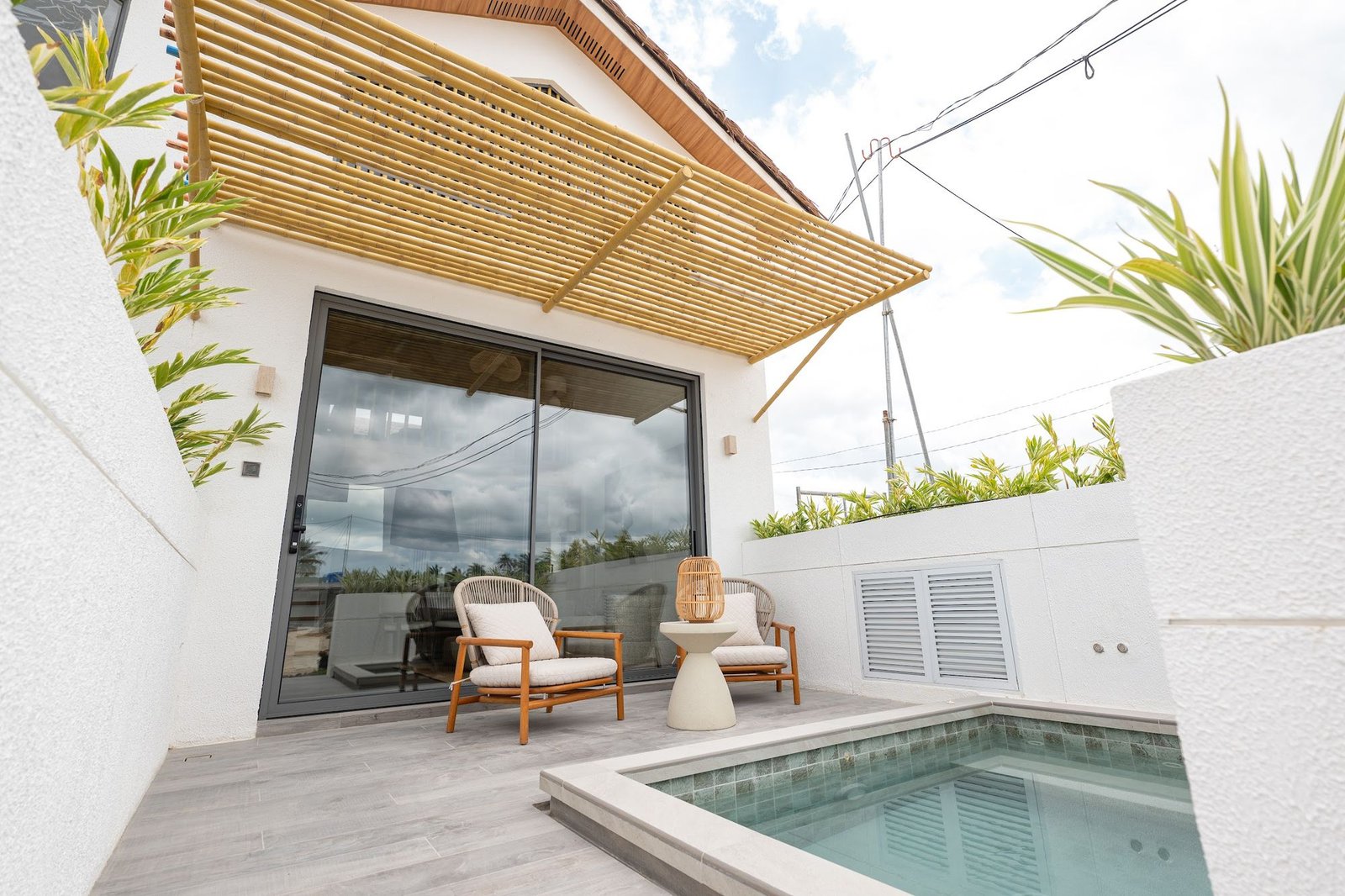
A foreign national cannot hold land title in the Philippines under their own name. What they can do is sign a leasehold: a long-term right to use a home and its lot, set out in a contract and registered with the Registry of Deeds. At Land of Nomads that leasehold runs for 99 years and is registered in the leaseholder’s name.
If you’ve reached this page comparing destinations, you’ve probably already run into the line that stops half the internet cold: “foreigners can’t hold real estate in the Philippines.” That’s a half-truth, and half-truths make poor advisors when there are six figures on the table. Let’s take it apart, piece by piece.
What Philippine law actually says
The Philippine Constitution reserves land title for Philippine citizens and for corporations with majority Filipino equity. A foreign national, as a result, cannot have a parcel titled under their own name. What the law does allow, and regulate, is a long-term lease in favor of foreign nationals: a contract granting use and enjoyment of the home for decades, registered with the Registry of Deeds. That mechanism is the leasehold, and it’s the route foreign nationals use across the Philippines, much as they do in other Southeast Asian markets. At Land of Nomads the leasehold is structured for a 99-year term under the current legal framework.
What a leasehold actually is
It’s worth separating it from two things people confuse it with. It isn’t an ordinary rental: a rental is a fixed-term contract, unregistered and terminable at will; a leasehold is a long-term, registered right over a specific unit, identified by its lot and floor plan. It isn’t full title to the land either: the land itself stays titled to Philippine nationals. What you secure, and what shows on the registry, is the right to use your unit for 99 years, transferable for whatever term remains on the contract.
Day to day, the gap with full title matters less than it looks on paper: you use your home, you hand it over to the rental operation if you want it to generate income, and you can transfer your right. Where it does matter is the entry price, well under markets where foreign nationals hold full title, and in the fact that the legal framework requires you to do the paperwork properly. There’s no shortcut there.
What you get when you sign
With Land of Nomads, securing a leasehold gets you four concrete things. A contract over an identified unit: not “a villa in the project,” but your specific lot, with its number and floor plan. Registration of the leasehold under your name with the corresponding registry. The full payment schedule in writing, down to the cent: the Standard Villa in San Fernando, for example, is paid with a $39,900 down payment, 60 installments of $1,159.75, and a final payment of $39,900, for a total of $149,385. And the verification pack: licenses from the builder (one of the five largest in the Philippines, founded in 1962), dated construction reports, and financial scenarios with their assumptions stated.
The questions you should ask before signing (to us or to any developer)
Who’s building, and since when. What licenses they hold, and whether they’re current. Where the contract gets registered, and under whose name. What happens if you want to transfer your right before the term ends. And what assumptions sit behind every yield figure they show you. If a developer gets uncomfortable with this list, you already have your answer. We answer it in writing and with documents: in the project numbers, in the sample contract, and on a 45-minute call where the uncomfortable questions get answered too.
If you want to see how this plays out on a real project, San Fernando starts at $1,159.75 a month with a $39,900 down payment, and El Nido starts at $1,688.00 a month with two terms to choose from. The sample contract is handed over before any signature, so your own advisor can go through it at their own pace. Here’s the detail on no-bank installment financing.