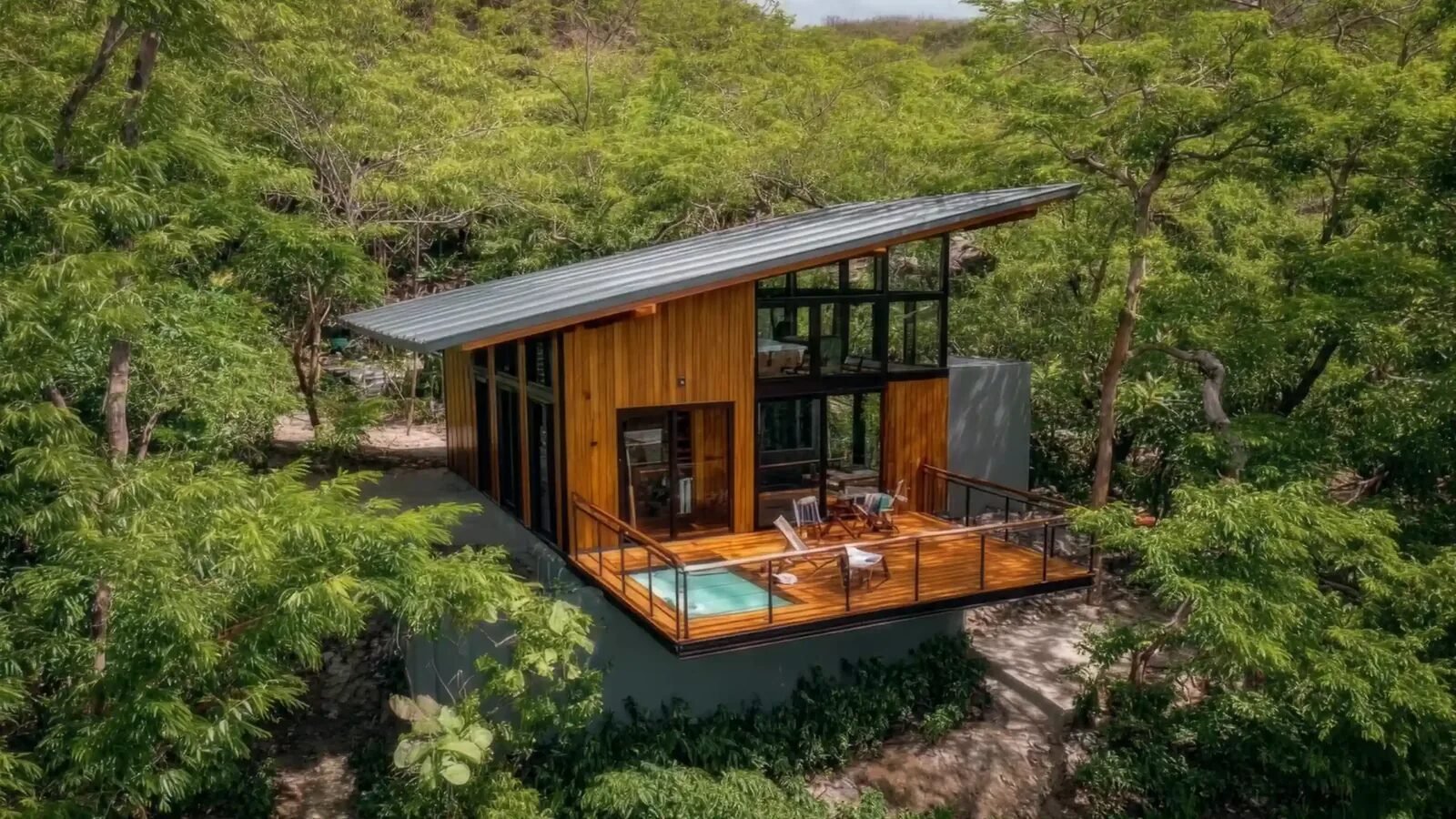
The eco second home ties together two things that will weigh in 2026: a second home that is no longer just for quick getaways but for working and staying for long stretches, and sustainable construction that cuts upkeep and lifts the value of the asset. Lower bills, more comfort, and an international audience that pays attention.
The second home stopped being a house for a few days. For a lot of people it is now a place to work from, switch off, and sometimes spend months away from the city. Alongside that, sustainability stopped being an add-on. Put the two together and you get a concept with real legs: the eco second home.
What is changing about the second home
For years, second home meant a flat by the beach, a family holiday house, or a place sitting empty half the year. That model is shifting.
Not only for holidays: productive too
The second home now blends work and rest, allows stays of several months, and works as a base to move around nearby destinations. Remote work has many people treating it as a place to really live, not a getaway.
Slow nomads and long stays
A profile is growing that moves between countries but no longer switches spot every couple of weeks. It prefers longer stretches in one place, as long as the home and the surroundings hold up.
Why sustainability lifts the value of the asset
Lower cost over time
A home that uses less energy and handles water better costs less to keep, throws fewer surprises on the bills, and grows more attractive as prices climb.
Real comfort and livability
The right materials, good ventilation and bioclimatic design are not just technical terms: they translate into homes that feel good day to day, even in demanding climates.
International demand
Whoever looks beyond their own country tends to value energy efficiency, access to nature, and a credible sustainability story. A well-planned eco second home connects with that audience.
What acquirers want in an eco second home
- Community: rather than isolating, they want neighbors with shared interests, shared services and well-run common areas.
- Nature nearby: close to the sea, the hills or green space, with the outdoors and a pace unlike the city’s.
- Efficiency and simplicity: systems that are easy to run, useful home tech (not decorative), and construction that does not demand constant fixes.
2026 as a turning point
The mix is clear: regulatory pressure toward more efficient buildings, growing interest in living part of the year abroad, and more environmental awareness. All of it pushes the eco second home from a nice-to-have to a category with weight of its own in the market.
The sustainable second home fits a more flexible life, with less noise and more coherence. For the acquirer, it is an asset that can earn income and, at the same time, a place of their own to live better. If you are after a project that could be your eco second home, our eco-villas in San Fernando, in Camarines Sur, are built with Super Adobe 2.0, start from $1,159.75 a month, and are put to work by the team when you are not using them. Here is the detail on no-bank installment financing.